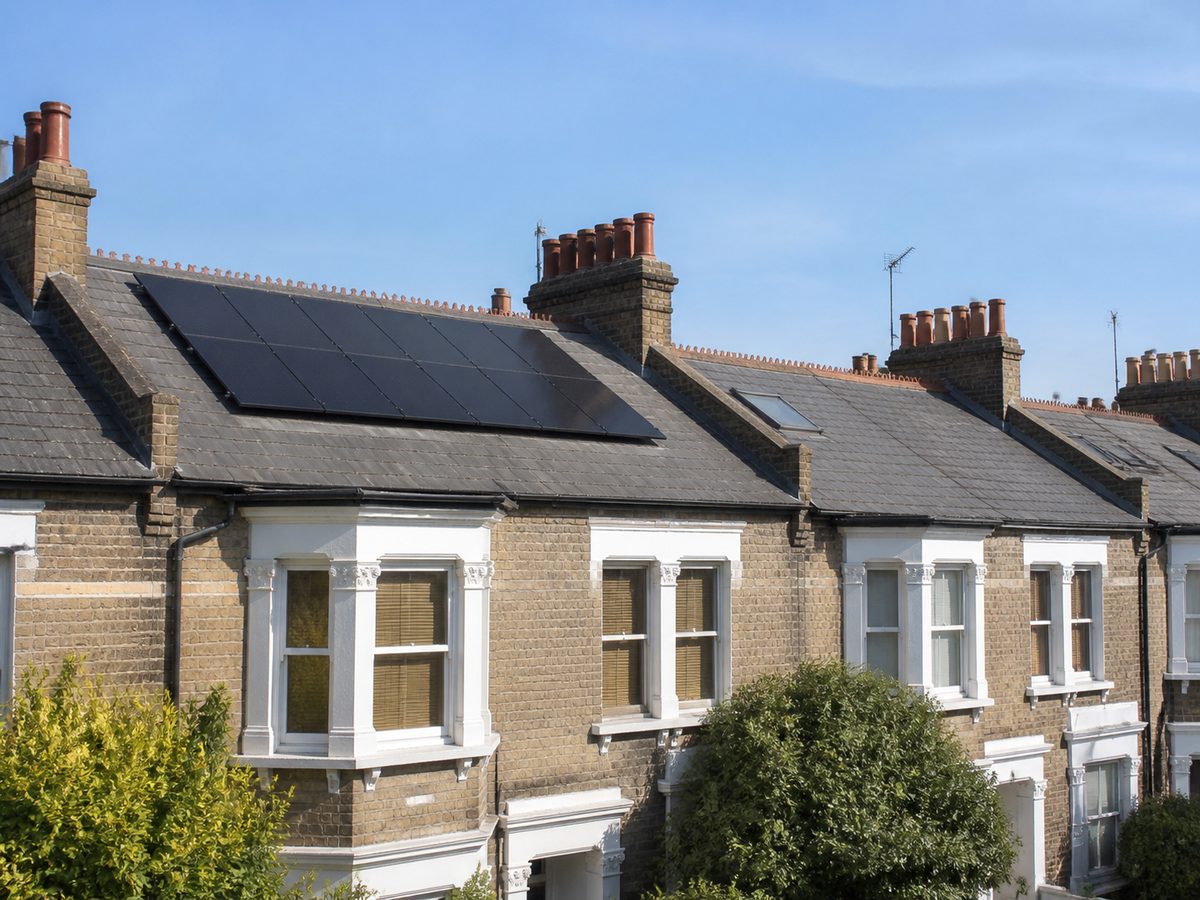
UK solar panel grants in 2026/27 target low-income households: Warm Homes: Local Grant offers up to £15,000 (income under £36,000, EPC D–G, England) and ECO4 funds upgrades for benefit-receiving households until 31 December 2026. Everyone else gets 0% VAT on solar installations until 31 March 2027 and Smart Export Guarantee payments for surplus electricity. The next big opening is the government's 0% Consumer Loan Scheme in April 2027.
What solar panel grants are available in the UK in 2026?
Four funding routes exist in 2026, and every one of them is means-tested or nation-specific. There is no universal solar grant for general homeowners — the government's approach is targeted support for low-income and inefficient homes, plus tax relief and export payments for everyone else.
| Scheme | Value | Who qualifies | Runs until |
|---|---|---|---|
| Warm Homes: Local Grant (England) | Up to £15,000 | Income under £36,000, EPC D–G | Live now — GOV.UK portal |
| ECO4 | Full upgrade funding | Benefit-receiving / low-income households | 31 December 2026 |
| Home Energy Scotland Grant | £7,500 grant + £7,500 interest-free loan | Scottish homeowners (off-gas-grid prioritised) | Live now |
| Nest (Wales) | Full improvement funding | Low-income, EPC D–G | Live now |
| 0% VAT (all UK) | Saves ~£1,300 on a £7,600 install | Everyone — supply + install | 31 March 2027 |
| 0% Consumer Loan (announced) | Interest-free solar loans | Details at launch | Opens April 2027 |
What is the Warm Homes: Local Grant and who qualifies?
The Warm Homes: Local Grant funds up to £15,000 of energy-efficiency improvements — solar panels, insulation, heat pumps — for households in England with total income under £36,000 living in homes rated EPC D, E, F or G. Applications run through the GOV.UK Warm Homes portal or your local council, which administers eligibility checks. Homes with a gas boiler or an EPC of C or above are generally outside the scheme's core criteria. The grant is a successor to the Green Homes Grant voucher scheme, administered by DESNZ with local authority delivery.
What is ECO4 and when does it end?
ECO4 (Energy Company Obligation, phase 4) obliges large energy suppliers to fund energy-efficiency upgrades including solar panels for low-income and benefit-receiving households. ECO4 ends on 31 December 2026 — applications submitted now must complete installation before the deadline, and a successor scheme (ECO5 / Warm Homes plan) has not been fully legislated. If your household receives qualifying benefits (Universal Credit, Pension Credit, Child Tax Credit and others), apply through an ECO4-registered installer now: the funding covers the full installation cost with nothing to repay.
Is the UK government offering free solar panels?
No universal free solar panel scheme exists. Fully funded installations happen only through ECO4 and the Warm Homes: Local Grant, and both require low household income, qualifying benefits (ECO4), and an EPC rating of D–G. A home with a gas boiler or an EPC of C or above is usually excluded. Companies advertising "free solar panels" to everyone are selling lease or power-purchase agreements: the company installs and owns the panels, keeps the export income, and you buy the electricity — read the terms before signing anything. The honest free-money options for most homeowners are the 0% VAT relief (worth £1,300+ on a typical install) and Smart Export Guarantee income.
What is the Smart Export Guarantee?
The Smart Export Guarantee (SEG) legally requires licensed energy suppliers to pay you for renewable electricity you export to the grid. Rates range from 1p to 40p per kWh depending on supplier and tariff — Octopus, Scottish Power and E.ON Next run the most competitive 2026 SEG tariffs, with dedicated export rates as high as 16.5p/kWh on smart tariffs. A typical 4kW system exports 40–60% of its generation, earning £80–£450 a year. You need an MCS-certified installation and a smart meter to register.
Solar Grant Eligibility Checker
60-second check across Warm Homes, ECO4 and the 2027 loan scheme.
How much do solar panels cost without a grant?
A typical domestic solar system costs £6,500–£8,000 fully installed in 2026: the Energy Saving Trust puts a 4.5kWp system at about £7,600, Checkatrade's 2026 guide at around £8,000 for a 4kW system on a 2-3 bedroom house, and MCS rolling data at £6,744 average for 4kW. A battery adds £2,000–£5,000. Full system-by-system pricing, payback maths and the panel-count breakdown live on our solar panel cost guide.
Do solar panels require planning permission?
Roof-mounted solar panels are permitted development on most UK houses: no planning permission, provided panels project no more than 200mm from the roof plane and are not visible from a highway on a flat roof. Exceptions: listed buildings, conservation areas (check with your council first), and Article 4 areas. Ground-mounted arrays above 9m² or 4m high need permission. The 0% VAT window and ECO4 deadline make 2026/27 the cheapest time to install — no planning barrier exists for the standard roof install.
Are solar grants worth it?
For eligible households, the Warm Homes: Local Grant covers most or all of a £7,600 installation — an unambiguous yes. For everyone else, the financial case still works without a grant: 0% VAT saves roughly £1,300 on installation, SEG payments add £80–£450/year, and a 4kW system cuts £450–£800/year from bills at 2026 electricity prices, giving an 8–12 year payback on a 25-year panel warranty. What the "grant framing" hides: the export tariff plus bill savings outperform most of the old feed-in-tariff economics for mid-income households.
What about heat pump grants?
The Boiler Upgrade Scheme runs alongside solar support: £7,500 off an air-source or ground-source heat pump in England and Wales, administered by Ofgem, running until April 2028. One grant per property, applied for by your MCS installer. Scotland stacks the Home Energy Scotland grant (£7,500) with an interest-free loan (another £7,500). The same Warm Homes: Local Grant eligibility that covers solar covers heat pumps — one application, both technologies.
Are there solar grants for businesses?
Business solar grants exist outside the domestic schemes: Excel Energy's 2026 roundup shows small commercial grants of £2,500–£15,000 and larger grants of £15,000–£35,000 for eligible businesses, plus full business-rate relief on renewable equipment and 0% VAT on commercial installs under 1MW. Farm and rural businesses have additional routes through the Farming Equipment and Technology Fund. Commercial systems pay back through the same SEG mechanism at commercial tariff rates.
Frequently asked questions
Are there any solar panel grants available in the UK in 2026?
Yes for lower-income households: Warm Homes £15,000 (income under £36k, EPC D–G) and ECO4 until December 2026. Everyone else gets 0% VAT to March 2027 and SEG payments instead.
Is the UK government offering free solar panels?
Not to most homeowners. Fully funded installs require low income, qualifying benefits and EPC D–G. "Free solar panel" ads are usually lease schemes where the company keeps your export income.
What is the 20% rule for solar?
Oversize your system ~20% above consumption and the inverter (DC/AC ratio up to 1.2) to maximise export income — the extra panels pay back in 3–5 years via SEG.
Are solar grants worth it?
Eligible: yes, £15,000 covers most installs. Everyone else: 0% VAT (£1,300+) plus £80–£450/year SEG still gives an 8–12 year payback on a 25-year system.
Do solar panels require planning permission?
No for standard roof installs — permitted development, panels within 200mm of the roof plane. Listed buildings and conservation areas need a check first.
Who is eligible for the Warm Homes Local Grant?
Income under £36,000, home rated EPC D–G, England. Up to £15,000 via the GOV.UK Warm Homes portal or your local council.
Can landlords apply for solar panel grants?
Yes — Warm Homes covers eligible tenancies (tenant income under £36k, EPC D–G) and ECO4 funds installs where tenants claim benefits. EPC C rules from 2026 make solar the standard compliance route.
How much do solar panels cost without a grant?
£6,500–£8,000 installed for a 4kW system in 2026 (Energy Saving Trust: £7,600 for 4.5kWp). Battery adds £2,000–£5,000.
Ready for real quotes?
Tell us where to send them — we'll match your project with a vetted local specialist and email your free, no-obligation quotes.
No spam, no call centres — just your quotes.